
Every September we see the same thing. Someone comes in, pulls up a photo from June, and says the brown patches across their cheeks were barely there before the summer. Now they have merged into something that shows through makeup.
That pattern, symmetrical, blotchy, sitting on the cheekbones or the upper lip or the forehead, is usually melasma. It is one of the most common concerns we treat in Miami, and it is also the one people most often make worse before they get to us. The reason is simple. Melasma looks like sun damage, so people treat it like sun damage, and the treatments that erase a sun spot can set melasma off.
Melasma and sun spots are not the same problem
A sun spot, or solar lentigo, is a single defined freckle-like mark where pigment cells have been damaged in one small area. It sits where the sun hit you. Zap it with the right laser setting and it darkens, flakes off, and stays gone for a long time.
Melasma behaves differently. The pigment-producing cells are not just overactive, they are hypersensitive, and the pigment often sits deeper in the skin with extra blood vessels feeding the area. It shows up in mirror-image patches on both sides of the face. It fades in winter and returns in summer. And when you hit it with heat or aggressive energy, it very often comes back darker than it started.
That is why our first appointment for pigment is a look under magnification rather than a laser. If we cannot tell which one you have, we are guessing, and guessing on melasma costs you months.
Why South Florida is such a difficult place to have it
Three things drive melasma, and Miami gives you all three at once.
- Ultraviolet light. Our UV index stays high nearly year round, so there is no genuine off season for your skin to recover in.
- Visible light and heat. This is the part most people have never heard. Melasma also reacts to visible light, including the light coming off your phone and laptop, and to plain heat. A standard clear sunscreen does nothing against either one. That is why patients who are religious about SPF still watch their patches darken.
- Hormones. Pregnancy, birth control, and hormone therapy are common triggers. Melasma was nicknamed “the mask of pregnancy” for a reason. If a hormonal trigger is active, treatment still helps, but we set expectations differently.
Add a beach weekend, a hot yoga habit, or a long drive with the sun on the driver’s side window, and you have the whole recipe.
What we use, and what each one runs
There is no single treatment that erases melasma. What works is a layered plan: daily photoprotection, the right topicals, and a series of gentle in-office treatments spaced out over a few months. Here is how the main options compare.
| Treatment | Best for | Downtime | Price at AMMA |
|---|---|---|---|
| VI Peel | Stubborn facial pigment, done as a series | 3 to 5 days of peeling | $350 (3 for $890) |
| SkinCeuticals Micropeel | Light resurfacing you can repeat often | Little to none | $150 |
| SkinPen microneedling | Texture and tone once pigment is calm | 1 to 2 days of pink | $350 face, $400 with exosomes |
| HydraFacial | Low-risk maintenance between peels | None | $180 / $250 / $290 |
| Laser for pigmented lesions | Discrete sun spots, not melasma | Darkening, then flaking | $150 to $400 |
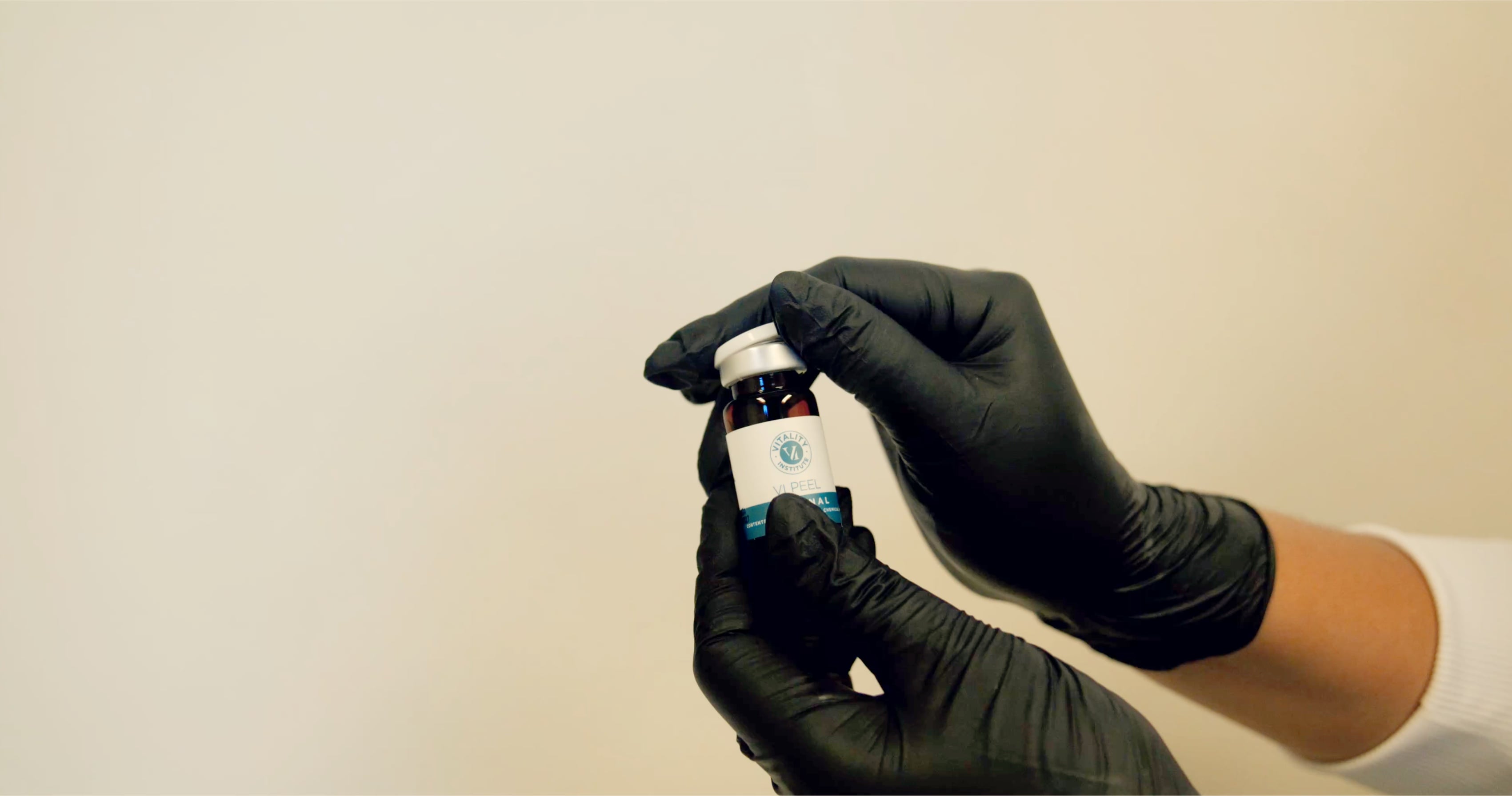
Most melasma plans we build start with a VI Peel series. The peel works at the surface and just below it, without the heat that provokes a flare, and a series of three spaced about four weeks apart gives us a fair read on how your skin responds. If you want the detail on what the peel itself feels like, we covered that in our VI Peel guide.
HydraFacial earns its place here because it is cool, gentle, and repeatable. It will not clear melasma on its own. It keeps skin in good condition between peels, which matters more than people expect over a six month plan. Because pigment work is ongoing rather than one and done, a lot of our pigment patients end up on a membership, and the math usually favors it.
The things that backfire
Patients arrive having tried most of these, so we will be blunt about them.
Aggressive laser and IPL. On melasma, especially in medium and deeper skin tones, high energy treatments can trigger rebound pigmentation that is worse than the original. Our laser platform is excellent at what it is built for, and we happily use it on discrete sun spots and on unwanted hair. We are conservative with it on melasma, and that is a deliberate clinical choice, not a limitation.
Scrubs and at-home acid stacking. Inflammation is fuel. Anything that leaves your face red and raw is working against you.
Hydroquinone forever. It is an effective ingredient used correctly, in cycles, under supervision. Used continuously for a year because a friend passed along a tube, it can stop working and, rarely, cause its own discoloration.
A tan to “even it out.” The patches darken faster than the skin around them, so the contrast gets sharper, not softer.
What a realistic six months looks like
Melasma is a chronic condition. We manage it the way you manage anything chronic, with a plan and a maintenance phase, and we would rather tell you that up front than sell you a miracle.
A typical course at AMMA: a mapping visit and a switch to a tinted mineral sunscreen with iron oxides, which is the part that blocks visible light. Then a peel series over roughly three months, with prescription-strength topicals running in the background. Around month three we reassess in the same lighting and decide whether to keep going, add microneedling for texture, or shift straight into maintenance.
Most people see meaningful lightening by the second or third peel. Very few get to zero, and anyone who promises you zero has not treated much melasma. What you can realistically expect is patches that no longer need concealer, and a clear plan for keeping them that way through next summer. Our skincare consultation is where that plan gets built, and the wellness consultation itself is complimentary.
Starting now, in September, is good timing. You have a handful of lower UV months ahead of you, which is the best window we get here for pigment work. We wrote more about that seasonal logic in the best time of year for lasers and peels in Miami.
Frequently Asked Questions
Can melasma be cured permanently?
No. Melasma is a chronic, relapsing condition, and honest clinics say so. It can be lightened significantly and kept quiet for long stretches with daily sun protection, the right topicals, and periodic treatments. Stopping protection is what brings it back.
Is laser safe for melasma on brown or olive skin?
It has to be approached carefully. Higher melanin skin has a greater risk of post-inflammatory hyperpigmentation and rebound darkening from heat-based treatments. We usually start with peels and topicals instead, and we assess your skin type before any energy-based option is considered.
How much does melasma treatment cost in Miami?
At AMMA, a VI Peel is $350, or $890 for a series of three, which is the most common starting point. A SkinCeuticals Micropeel is $150. HydraFacial runs $180 to $290 depending on the tier. Payment plans are available through our financing options.
Will it come back after pregnancy or if I stop birth control?
Hormonally triggered melasma often fades on its own within several months of the trigger ending, though not always completely. Treatment while the hormonal driver is still active is worth doing, but we aim for control rather than clearance, and we revisit the plan once things settle.
How soon will I see a difference?
Most patients notice lightening after the second treatment, roughly six to eight weeks in. Deeper dermal melasma moves more slowly and needs a longer runway. We photograph in consistent lighting at each visit, because pigment changes gradually enough that the mirror will not give you an honest answer.
If the patches have been bothering you since summer, book a consultation and let us tell you which kind of pigment you are actually dealing with before you spend money treating the wrong one.
Reviewed by the AMMA Aesthetics Medical Team.
Ready to Book Your Treatment?
Schedule your complimentary consultation at AMMA Aesthetics in South Miami and let's create your personalized plan.
Book Your Free Consultation Or call us at (786) 558-4239