
Every September we get the same phone call. Someone is standing in their shower in Coral Gables looking at a handful of hair, wondering what happened over the summer. Sometimes they are on a GLP-1 and down thirty pounds. Sometimes they had a rough spring. Sometimes nothing obvious happened at all, and that is somehow worse.
Hair shedding is one of the few aesthetic concerns that genuinely frightens people, and it is also one of the most misunderstood. So here is what we actually see in the treatment room, what platelet-rich fibrin can do for a thinning scalp, and where it stops being the right answer.
Why fall is peak shedding season
You are not imagining it. Seasonal shedding is well documented in the dermatology literature, and it tends to peak in late summer and early fall. The working theory is that more of your follicles sit in the resting phase during the long daylight months, then release together a few months later. In a city where we are outside year round, that pattern can feel exaggerated.
The other thing worth knowing is the delay. Telogen effluvium, the diffuse shedding most people experience, usually shows up two to four months after whatever triggered it. So the hair coming out in September is often reporting on May. A crash diet, a surgery, a fever, a stressful stretch at work, a new medication, postpartum changes, all of it lands later. Patients frequently blame the wrong month.
Diffuse shedding is also usually self-limiting. If the trigger resolves, the hair typically returns over six to nine months. That is genuinely reassuring, and it is also why we do not rush every new shedder into a treatment plan on day one.
The GLP-1 conversation we have almost daily
Medical weight loss has changed a lot of lives at AMMA. It has also produced a very predictable side conversation about hair. A 2026 analysis published in The BMJ looking at tens of thousands of patients found a modest but real increase in reported hair loss among people taking GLP-1 medications.
Here is the nuance that matters. In most cases the medication itself is not attacking your follicles. Rapid weight loss is a metabolic stressor, and your body triages. Protein intake drops, calories drop, iron and ferritin drop, and hair, which is metabolically expensive and not required for survival, goes into the resting phase. The faster the loss, the more likely the shed.
What we do about it is not “stop the program.” It is usually some combination of slowing the taper, getting protein intake up to a real target, checking labs, and supporting the follicles directly. Our medical weight loss program uses tirzepatide and retatrutide, and part of what you are paying for is a clinician watching for exactly this. If you want more background on the broader side effect picture, we covered it in GLP-1 side effects and how to manage them.
What PRF is, in plain terms
Platelet-rich fibrin starts with a simple blood draw, usually two or three small tubes. We spin it in a centrifuge at a lower speed than traditional PRP and without anticoagulant, which leaves a fibrin scaffold behind along with your platelets and white blood cells. That scaffold is the whole point. Instead of releasing growth factors all at once, PRF releases them gradually over several days.
Those growth factors signal blood vessels to form around the follicle and encourage follicles sitting in the resting phase to cycle back into growth. It is your own biology, concentrated and placed where you need it. Nothing synthetic goes in.
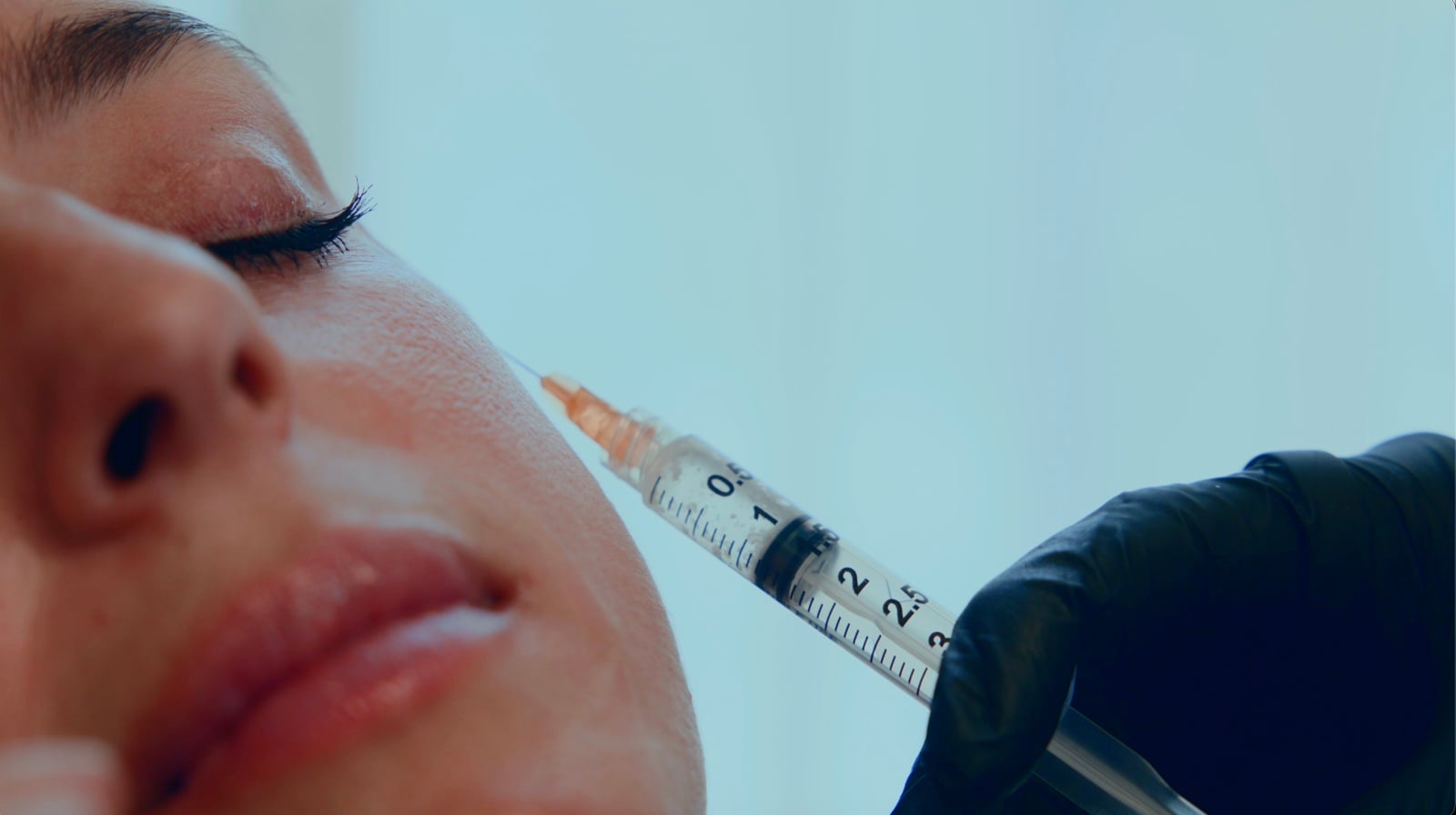
The appointment itself runs about forty five minutes to an hour, most of which is the draw and the spin. The scalp injections take a few minutes. We use a very fine needle and a series of small deposits across the thinning zones, most often the crown, the part line, and the temples. Most patients describe it as brief pressure and pinching rather than pain. You can wash your hair the next day and go straight back to normal life, which is a real advantage over more aggressive options.
Results are gradual and they are cumulative. Shedding usually calms first, often within the first two months. Density changes come later, generally around month three to six, and they build across a series. This is a treatment for people who are willing to think in seasons, not weeks. PRF for the scalp is part of our broader regenerative injectables menu, and we use the same technology under the eyes, which you can read about in our guide to PRF under the eyes.
What it costs at AMMA
These are our current menu prices. No consult fee, no pressure to buy a package on the first visit.
| Service | Single | Series of 3 |
|---|---|---|
| Hair restoration with PRF or PRP | $650 | $1,660 |
| EZ-Gel / PRF for the face | $600 | $1,530 |
| Medical weight loss, first month | $349 | 3 months $1,275 |
| Medical weight loss, following months | $449 | n/a |
| Wellness injections (B12 + MIC, Lipo-Mino, Glutathione) | $50 | n/a |
| NAD+ IV therapy, 100 mg | $329 | n/a |
| Wellness consultation | Complimentary | n/a |
Most scalp patients start with a series of three spaced about four to six weeks apart, then reassess. If you are budgeting across a full plan, our membership options are worth a look, and financing is available for larger treatment series.
Who PRF helps, and who needs something else first
PRF tends to do its best work on early to moderate thinning where the follicles are miniaturizing but still alive. Widening part lines, a softer crown, thinning temples, post-pregnancy or post-weight-loss shedding, and men in the early stages of pattern loss all fall into that group. It also pairs well with medical management for patients who are already on minoxidil or finasteride and want an in-office layer on top.
It is not the right tool for a scalp that has been slick and bare for years. Once a follicle is gone, no growth factor brings it back, and any clinic that tells you otherwise is selling something. Active scalp inflammation, scarring alopecia, untreated thyroid disease, and significant iron deficiency all need to be addressed before injections make sense. That is why we ask about labs, and why we will occasionally tell you to see your primary care physician or a dermatologist before you spend a dollar with us.
We also want honesty about maintenance. Hair biology does not hold still. Most patients who do well come back for a single maintenance session every six to twelve months. If that does not fit your life, say so at the consult and we will talk through alternatives.
Frequently Asked Questions
How much does PRF hair restoration cost in Miami?
At AMMA, hair restoration with PRF or PRP is $650 per session, or $1,660 for a series of three. Most patients begin with the series of three spaced four to six weeks apart, then move to maintenance once or twice a year. Your wellness consultation is complimentary.
Is PRF better than PRP for hair?
They use the same underlying idea, which is concentrating your own platelets and growth factors. PRF is spun more slowly and without anticoagulant, so it keeps a fibrin scaffold that releases growth factors over several days instead of all at once. Many providers prefer PRF for that slower release. We will recommend one or the other at your consult based on your scalp and your goals.
Will my hair grow back if I lost it on a GLP-1?
Usually yes. Shedding related to rapid weight loss is typically telogen effluvium, which is reversible once the trigger settles. The priority is protein intake, adequate calories, and checking iron, ferritin, vitamin D, and thyroid function. PRF can shorten the recovery and improve density while your body catches up, but it works best alongside those fundamentals, not instead of them.
How many sessions will I need, and when will I see results?
Plan on three sessions to start. Shedding often slows within the first two months, and visible density changes generally appear between month three and month six. Hair grows slowly, so photographs at each visit matter more than the mirror.
Does the treatment hurt, and is there downtime?
Most patients rate it as mild. The injections are quick and we use a very fine needle. You may feel some scalp tenderness or tightness for a day. You can shower and wash your hair the following morning, and there is no visible downtime, which makes it easy to schedule on a workday.
If you have been watching your part line widen and you are tired of guessing, come in and let us look at it properly. Book a complimentary wellness consultation at our South Miami office and we will tell you honestly whether PRF is the right starting point or whether something else should come first.
Reviewed by the AMMA Aesthetics Medical Team.
Ready to Book Your Treatment?
Schedule your complimentary consultation at AMMA Aesthetics in South Miami and let's create your personalized plan.
Book Your Free Consultation Or call us at (786) 558-4239